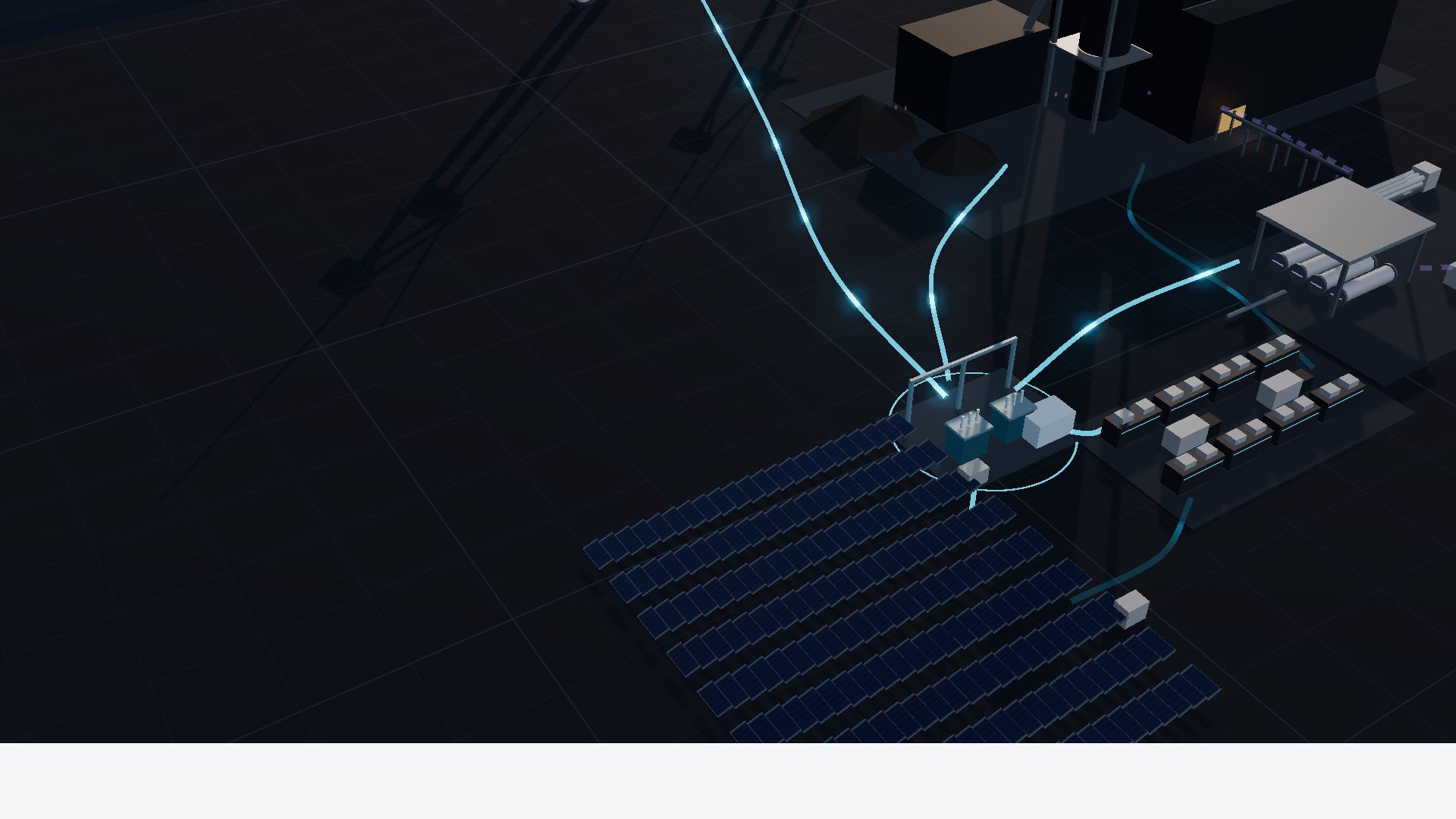
Systems · Grid & energy integration
Match energy availability to the operation it must support.
Industrial electricity requirements change over time. So do renewable generation and electricity prices. KyperX examines how supply, storage and demand could be coordinated within the site's technical and commercial constraints.
Time-dependent assessment
Match the hours, not just the totals.
Daily energy totals cannot show whether a load can be served at each interval. A useful assessment needs demand profiles, generation assumptions, grid limits and the operating characteristics of storage and other equipment. Those inputs reveal when an option is physically feasible and where more information is needed.
Industrial demand
A useful assessment needs demand profiles and the operating characteristics of storage and other equipment.
- Demand profile and operating schedule
- Power and usable energy of storage
- Feasible charging windows
Available generation
Daily energy totals cannot show whether a load can be served at each interval.
- Generation assumptions
- Grid limits
- Which energy can be used directly and which must be stored
Storage and charging opportunities
Charging storage during lower-cost periods may create value when the stored electricity can serve a later requirement.
- Delivered electricity costs
- Charging access
- Losses and degradation
- Operating limits
Storage economics
Find value within the operating limits.
Charging storage during lower-cost periods may create value when the stored electricity can serve a later requirement. The assessment must account for delivered electricity costs, charging access, losses, degradation and operating limits. A low price alone does not establish a viable storage project.
Explore Industrial Battery StorageTechnical assessment enquiries.
Useful inputs
- Interval load
- Tariff
- Resource profile
- Connection limits
- Equipment assumptions
- 01
Supply and demand scenarios
Compare how candidate sources could serve the load.
- 02
Storage duty
Investigate power, usable energy and feasible charging windows.
- 03
Grid interface requirements
Define the connection information and specialist studies needed.
- 04
Operating economics
Assess preliminary costs under explicit tariff and scheduling assumptions.
An agreed assessment may produce interval-based supply and demand scenarios, a preliminary storage duty, identified constraint periods and sensitivity results. Grid-connection studies, approvals and live control-system delivery require separately defined scope and specialist responsibilities.
Evidence
Energy cost and emissions need separate evidence.
The electricity source and accounting boundary matter when evaluating hydrogen or lower-emission industrial production. Price-based charging and renewable-energy claims should be assessed separately, with the assumptions for each made clear.
System connection
Connected to the green steel program.
Electricity supplies the industrial processes directly and also supplies electrolysis. Understanding those combined demands is central to evaluating the proposed production configuration.
Questions customers ask.
Can you assess an existing site's load data?
We welcome enquiries based on available interval data, tariffs and operating requirements. Scope and data handling are agreed before the work starts.
Does the website show a live dispatch platform?
The interactive content explains analysis and dependencies. It does not represent a deployed KyperX plant controller.
Can the assessment include equipment options?
Yes, a scoped enquiry can combine operating requirements with battery, generation or other equipment evaluation.